Water damage in worship centers can be devastating—how prepared is your facility to handle it? Whether it’s a burst pipe, roof leak, or flooding, the impact can disrupt services, damage sacred artifacts, and create safety hazards. At Projekt Property Restoration, we specialize in fast, professional water damage restoration using advanced equipment tailored for large structures like churches, temples, and mosques. Visit https://www.projektrestorationca.com or call 855-933-7935 to get immediate help from our expert team.
Quick action is the key. This article outlines how to assess the damage, stop the source, and begin restoration without delay. It also covers insurance coordination, mold prevention, and how to protect valuable items and architectural features. With expert insights and proven strategies, you’ll learn how to restore your worship center swiftly and safely.
But that’s just the beginning. Restoration expert Dr. Jennifer Mendez, who has consulted on over 200 religious property recoveries, says, “The first 24 hours determine the future of the structure.” So, let’s dive into the essential steps every worship center must take to recover from water damage and return to serving their community.
Assessing the Extent of Water Damage
A detailed initial inspection is crucial to determine the full scope of water damage. Begin by scanning for visible signs like ceiling stains, peeling paint, or warped flooring. Don’t overlook musty odors, which often signal hidden moisture. Mold growth, especially in corners or behind furniture, is another red flag.
Use a flashlight to check dark areas and behind baseboards. For deeper insight, deploy moisture meters and infrared cameras. These tools detect trapped moisture behind walls and under floors, where damage often goes unnoticed. Acting fast limits structural deterioration and reduces the risk of mold infestation.
Document everything thoroughly. Take clear photos of all affected areas and write detailed notes. This documentation is essential for insurance claims and professional restoration. For expert help, explore our services or learn more about hidden water damage detection.
Time is critical. Delays can worsen the situation and increase repair costs. A prompt, accurate assessment sets the foundation for effective recovery.
Identifying the Source of Water Intrusion
Roof leaks often top the list of water damage culprits in worship centers. Aging shingles, clogged gutters, or damaged flashing can let moisture seep in. Plumbing failures are another frequent issue, especially in older buildings with outdated pipes. Burst pipes or leaking fixtures can go unnoticed until significant damage occurs. Flooding from heavy rain or poor drainage also poses a serious threat. Additionally, malfunctioning HVAC systems can cause condensation buildup, leading to hidden moisture problems.
To trace the source, begin with a thorough visual inspection. Check ceilings, walls, and floors for discoloration or warping. Use moisture meters to detect damp areas behind surfaces. Follow water trails back to their origin, especially near plumbing lines or roof joints. If the source remains unclear, consult a professional immediately.
Stopping the water source is critical before starting any restoration. Otherwise, repairs may be temporary and ineffective. For complex or hidden issues, rely on experts who specialize in water damage detection and repair. Their tools and experience ensure nothing gets overlooked.
Explore our services to learn how we handle intricate water intrusion cases with precision and care.
Immediate Safety and Mitigation Measures
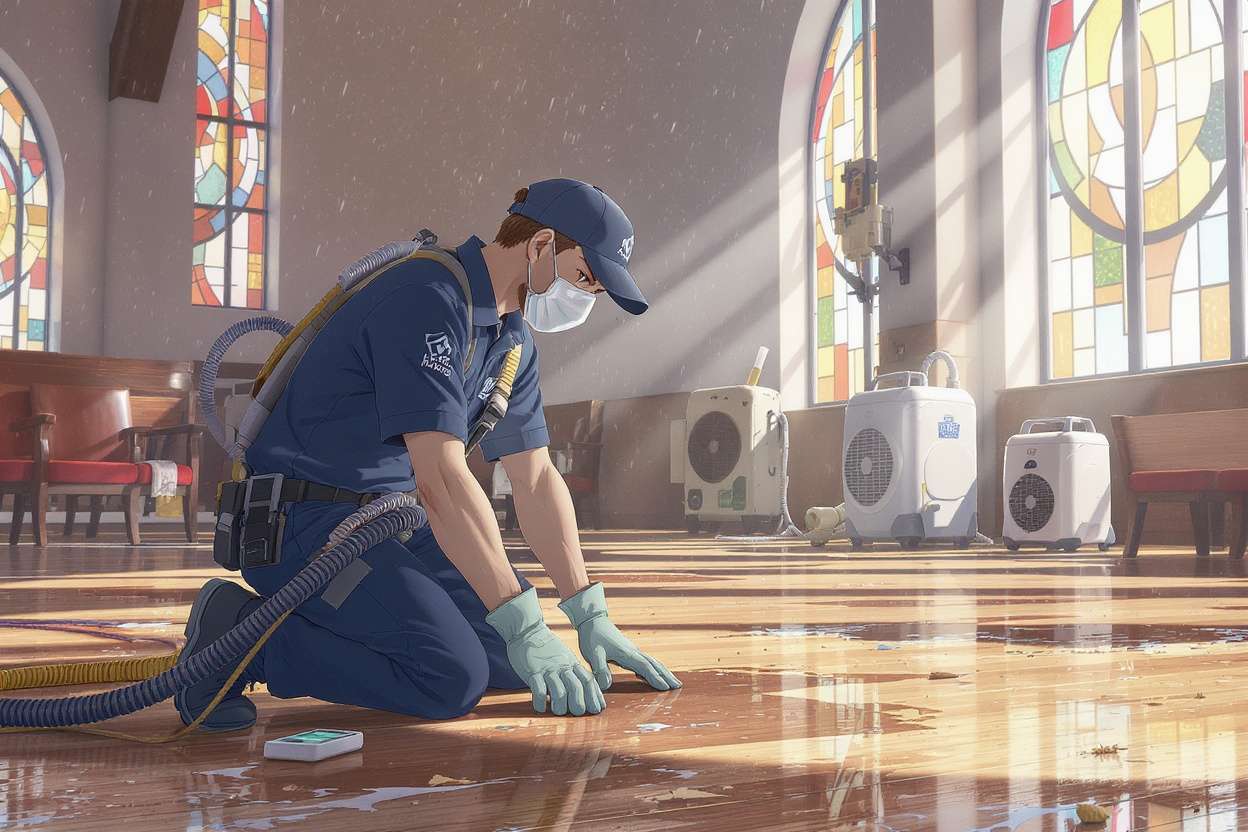
Before entering a water-damaged worship center, shut off electricity at the main breaker. This prevents electrical hazards. Always wear protective gear, including rubber boots, gloves, and a mask. These reduce exposure to contaminants and mold spores.
Secure the area by blocking off unsafe zones with caution tape or signage. Remove loose debris and unstable furniture to prevent injuries. If ceilings sag or walls bulge, avoid those areas until inspected by professionals.
Begin water removal immediately. Use submersible pumps for standing water. Follow with wet vacuums to extract moisture from carpets and floors. Finish by mopping residual water to reduce slip risks.
Open windows and doors to increase airflow. Set up fans and dehumidifiers to accelerate drying. This step helps prevent mold growth and structural damage. Monitor humidity levels to ensure they drop below 60%.
For expert help, explore our restoration services tailored to emergency situations. Learn more about our commitment to safety and excellence on our mission page. Acting fast protects both the building and its community.
Contacting Insurance and Understanding Coverage
Begin by calling your insurance provider immediately after discovering water damage. Provide them with your policy number and a clear description of the incident. Request detailed instructions on how to file a claim and what documentation is required. Take photos and videos of all affected areas before starting any cleanup. Keep damaged items for inspection.
Most religious institutions carry commercial property insurance. This typically covers structural damage, contents, and sometimes loss of income. However, coverage may vary depending on the source of the water. Floods, for example, often require separate policies.
Work closely with the assigned adjuster. Be present during their inspection and provide all necessary documentation. Maintain a log of conversations and emails for reference. Review your policy carefully to understand exclusions, such as gradual leaks or poor maintenance.
If you’re unsure about your coverage, consult a professional. For more guidance, visit our FAQ page or explore our services to see how we assist worship centers. Acting quickly and staying informed can significantly impact your recovery process.
Hiring Professional Restoration Services
When water damage strikes a worship center, immediate action is crucial. If the damage is extensive or involves contaminated water, hire certified restoration experts. These professionals have the tools and training to handle complex situations safely and efficiently.
Choose a contractor with IICRC certification and proven experience in religious facilities. Ask for references and check online reviews. A reputable company should also offer 24/7 emergency services and clear communication throughout the process.
The restoration process begins with a thorough assessment. Next comes water extraction using industrial-grade equipment. Once the water is removed, drying and dehumidification prevent further damage. Cleaning and sanitizing follow to eliminate bacteria and odors. Finally, repairs restore the structure to its original condition.
Mold remediation is essential, especially in high-humidity areas. Professionals use specialized techniques to remove mold and prevent its return. Air quality testing ensures the environment is safe for worship and community gatherings.
For more information on our services or to learn about our mission, visit our website. Don’t wait—protect your sacred space with expert help.
Salvaging and Restoring Sacred Items and Furnishings
Begin by gently removing sacred texts and artifacts from affected areas. Use gloves to prevent further contamination. Place items in a dry, well-ventilated space away from direct sunlight. For delicate or irreplaceable objects, consult a professional conservator immediately. Their expertise ensures proper handling and restoration.
Wooden furnishings like pews and altars require careful drying. Avoid forced heat, which can cause warping. Instead, use fans and dehumidifiers to reduce moisture gradually. Clean surfaces with a mild, non-abrasive solution. For musical instruments, disassemble if possible and dry each component separately. Textiles should be laid flat and air-dried to prevent shrinkage or distortion.
Preserving these items goes beyond physical restoration. They hold deep emotional and spiritual value for the congregation. Their recovery helps restore a sense of normalcy and hope.
If you’re unsure where to begin, explore our services for expert assistance. You can also learn more about our mission and values on the our mission page. Acting quickly and thoughtfully can make all the difference in saving what matters most.
Preventing Mold and Long-Term Structural Damage
Mold thrives in damp, poorly ventilated areas, making worship centers especially vulnerable after water damage. High ceilings, hidden corners, and porous materials create ideal conditions for spores to spread. Left unchecked, mold can compromise air quality and cause respiratory issues for congregants. It also weakens structural components over time.
To prevent this, act quickly. Begin with rapid drying of all affected areas. Use industrial fans and dehumidifiers to reduce moisture levels. Keep indoor humidity below 60% to discourage mold growth. Ensure proper airflow by opening windows and using ventilation systems regularly.
Watch for musty odors, discoloration on walls, or peeling paint—these are early signs of mold. If you notice any of these, seek professional remediation immediately.
Inspect walls, ceilings, and floors regularly. Look for warping, stains, or soft spots. Address leaks and water intrusion without delay. Schedule routine maintenance to preserve the building’s integrity.
For more on our restoration process, visit our how-it-works page. Stay proactive to protect your sacred space from long-term damage.
Rebuilding and Renovating After Water Damage
After water damage, begin by assessing the full extent of structural harm. Remove compromised drywall, flooring, and insulation immediately. Replace all materials with moisture-resistant alternatives to prevent future issues. Use waterproof paint, sealed concrete, and treated wood for added protection.
Next, improve drainage systems around the foundation. Install gutters, downspouts, and French drains to redirect water away from the building. Consider elevating HVAC systems and electrical components to avoid future exposure.
While renovating, preserve the original design elements. Restore stained glass, woodwork, and stone features with care. Work with specialists to maintain the worship center’s historical integrity.
Update the building to meet current codes. Add ramps, wider doorways, and accessible restrooms to ensure compliance with ADA standards. These upgrades enhance safety and inclusivity for all visitors.
For expert guidance, explore our services tailored to restoration needs. You can also learn more about our mission and values on the our mission page.
Every step should balance modern safety with respect for tradition. Thoughtful planning ensures the worship center remains a place of refuge and beauty for generations.
Developing a Water Damage Emergency Plan
Start by assembling a dedicated emergency response team. Assign clear roles to staff and volunteers for swift action. Designate individuals to handle evacuation, communication, and damage assessment. Ensure everyone knows their responsibilities before an incident occurs.
Create a detailed response plan tailored to your facility’s layout and needs. Include evacuation routes, shut-off points for utilities, and safe zones. Post this plan in visible areas throughout the building.
Keep an updated list of emergency contacts, including local authorities and restoration professionals. Store this list both digitally and in print. Stock essential supplies like flashlights, first-aid kits, and waterproof storage containers.
Schedule regular training sessions and emergency drills. These exercises help reinforce procedures and build confidence among team members. Review and update the plan annually or after any major changes to the facility.
Make sure your team understands the importance of acting quickly. Delays can worsen damage and increase recovery time. For more guidance, explore our services and learn how we support faith-based facilities. You can also visit our about page to understand our commitment to community safety.
Educating the Congregation and Community
Open and honest communication fosters trust during challenging times. Keep your congregation informed with regular updates and clear timelines. Transparency helps reduce confusion and builds unity throughout the recovery process. Encourage members to participate in restoration efforts through organized volunteer days or donation drives. These initiatives not only speed up recovery but also strengthen community bonds.
Use this moment to teach valuable lessons on stewardship and resilience. Highlight how collective responsibility and faith can overcome adversity. Share stories of progress and gratitude during services or newsletters to uplift spirits. Maintaining morale is crucial—offer prayer groups, counseling, or small gatherings to provide emotional and spiritual support.
Celebrate small victories along the way. Acknowledge every step forward, no matter how minor. This keeps hope alive and encourages continued involvement. For more insight into how restoration services can help, explore our services page. You can also learn more about our mission and values by visiting our mission. Together, your congregation can emerge stronger, more connected, and spiritually renewed.
Frequently Asked Questions (FAQs)
After discovering water damage, shut off the water source immediately. Then, contact a professional restoration team without delay. If walls, ceilings, or floors show visible damage, it’s time to seek expert help. Minor stains may seem harmless, but hidden moisture can lead to mold. Insurance may cover restoration, but policies vary—review your coverage carefully. Restoration timelines depend on the extent of the damage, but most projects take several days to weeks.
Mold can be removed, but complete eradication requires specialized treatment. If sacred items are affected, handle them with care and consult a restoration expert. To prevent future issues, schedule regular inspections and maintain roofing, plumbing, and drainage systems. Avoid holding services in damaged areas, as it may pose health and safety risks. Communicate updates clearly with your congregation through emails, announcements, or social media.
For more guidance, visit our FAQ page or explore our services to understand how we can help. You can also learn how to detect early signs of damage by reading our guide on hidden water damage.