Mold in wall cavities is a hidden threat that can compromise the structural integrity of your home or business and pose serious health risks to occupants. At Projekt Property Restoration, we understand how crucial it is to prevent mold before it becomes a costly and hazardous issue. With our extensive experience in mold remediation and water damage restoration, we help property owners take proactive steps to protect their spaces. Knowing how to prevent mold in wall cavities is essential, especially in areas prone to moisture buildup due to leaks, poor ventilation, or previous water damage. Our team of highly-trained professionals uses advanced techniques and equipment to identify potential problem areas and implement effective solutions. Whether you’re a homeowner, business owner, or property manager, preventing mold growth is key to maintaining a safe and healthy environment. Backed by our mission to deliver fast, friendly, and professional service, Projekt Property Restoration is here to help you safeguard your property and restore peace of mind—because we’re “A Restoration Company That Gets Things Back to Normal.”
Identify Common Causes of Mold in Wall Cavities
Mold growth within wall cavities is a common yet often overlooked issue that can lead to serious structural damage and health concerns if not addressed promptly. Understanding the root causes of mold in these hidden areas is essential for effective prevention and long-term maintenance of a healthy indoor environment. Mold thrives in dark, damp, and poorly ventilated spaces, making wall cavities an ideal breeding ground when certain conditions are present. Identifying these conditions is the first step in preventing mold infestations.
One of the primary causes of mold in wall cavities is water intrusion. This can occur due to a variety of reasons, including roof leaks, plumbing failures, or exterior wall cracks. When water seeps into the wall and remains undetected, it creates a moist environment conducive to mold growth. According to the Environmental Protection Agency (EPA), mold can begin to grow within 24 to 48 hours of water exposure, especially in areas with high humidity levels.
Another significant contributor is condensation. In homes with poor insulation or inadequate ventilation, temperature differences between indoor and outdoor environments can cause moisture to condense on interior wall surfaces. Over time, this moisture can accumulate inside wall cavities, providing the perfect conditions for mold to flourish. This is particularly common in older homes or buildings located in regions with high humidity.
Leaky plumbing is also a frequent culprit. Pipes that run through walls can develop slow leaks that go unnoticed for extended periods. These leaks may not be visible on the surface but can saturate insulation and drywall, creating a hidden moisture problem. Regular inspection and maintenance of plumbing systems are crucial to prevent such issues.
Poor construction practices and building materials can exacerbate mold problems. For instance, using materials that are not mold-resistant or failing to properly seal joints and openings can allow moisture to penetrate wall cavities. Additionally, construction errors such as improper flashing around windows and doors can lead to water infiltration during rainstorms.
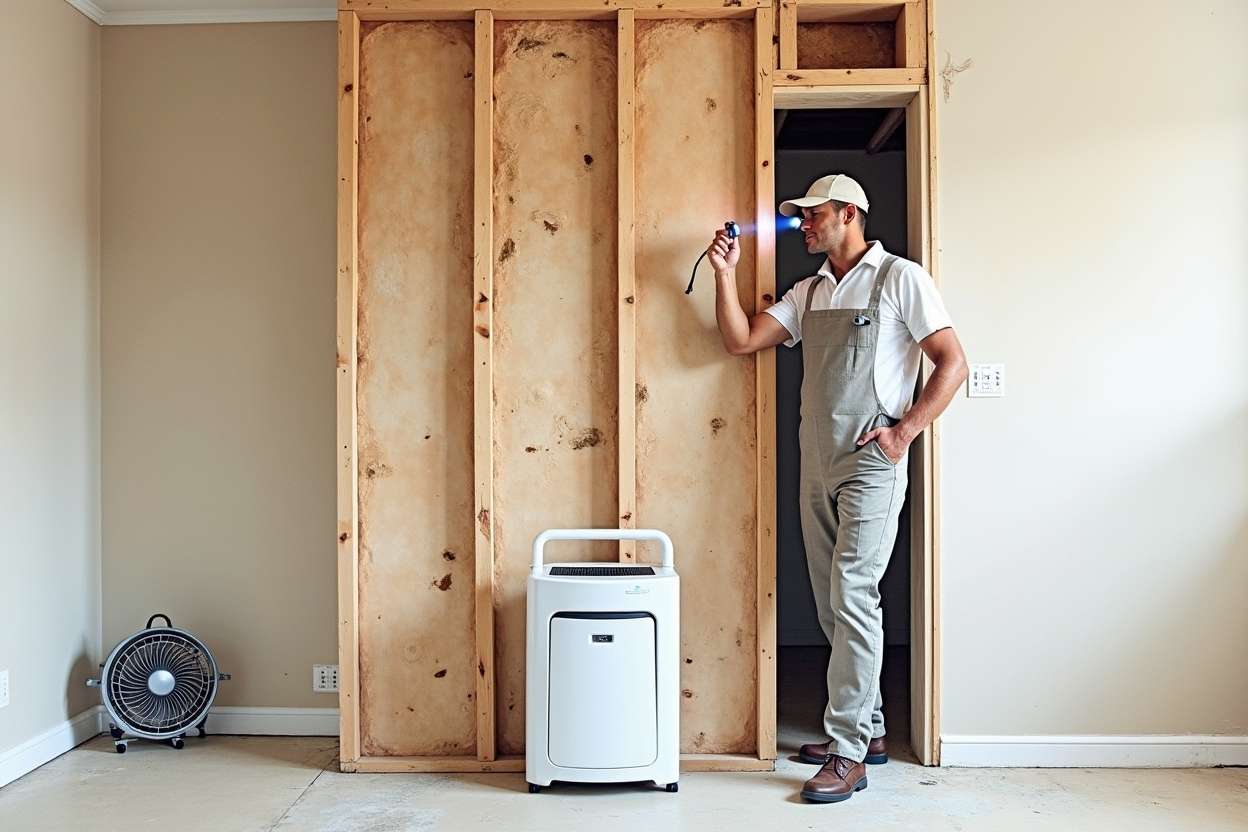
Flooding events, whether from natural disasters or household incidents, can also lead to mold growth if walls are not thoroughly dried. Even after visible water is removed, moisture can remain trapped within wall cavities, especially if the walls are not opened up and dried using professional-grade equipment. This is why it is essential to seek professional help after any significant water damage. Learn more about our water damage services to understand how we can help mitigate these risks.
Inadequate ventilation is another common cause. Bathrooms, kitchens, and laundry rooms generate a lot of moisture, and if this moisture is not properly vented outside, it can accumulate in wall cavities. Installing exhaust fans and ensuring proper airflow throughout the home can significantly reduce the risk of mold.
Blocked or malfunctioning gutters and downspouts can also lead to water pooling around the foundation of a building. Over time, this water can seep into the walls, especially if the foundation is not properly sealed. Regular maintenance of your home’s drainage system is a simple yet effective way to prevent this issue.
Here are some common sources of moisture that can lead to mold in wall cavities:
- Leaking roofs or windows allowing rainwater to enter walls
- Broken or leaking plumbing pipes inside walls
- Condensation due to poor insulation or temperature differences
- Flooding from natural disasters or household incidents
- High indoor humidity levels without proper ventilation
- Improperly sealed building materials or construction flaws
- Clogged gutters or poor drainage around the foundation
"Mold can begin growing in as little as 24 to 48 hours after water exposure, especially in hidden areas like wall cavities" — Environmental Protection Agency (EPA)
According to the Centers for Disease Control and Prevention (CDC), exposure to mold can cause a variety of health issues, including respiratory problems, allergic reactions, and even neurological effects in some cases. This makes it even more critical to identify and eliminate the sources of mold before they become a serious problem.
To effectively prevent mold in wall cavities, it is essential to understand how to detect hidden water damage early. Our detailed guide on how to identify hidden water damage early offers practical tips and signs to watch for, helping homeowners take proactive steps before mold becomes a major issue.
For those dealing with mold issues or looking to prevent them, professional mold remediation services are often necessary. At Projekt Restoration, we specialize in comprehensive mold remediation solutions that address both the visible and hidden aspects of mold infestations. Our team uses advanced technology and proven methods to ensure your home remains safe and mold-free.
For more information on how we work and what you can expect from our services, visit our page on how it works. Taking the time to understand the common causes of mold in wall cavities is a crucial step in maintaining a healthy and structurally sound home. By addressing these issues early and seeking professional help when needed, you can protect your property and the well-being of its occupants.
For further reading and resources on mold prevention and home maintenance, consider the following:
- EPA Mold Resources
- CDC Mold Information
- International Association of Certified Home Inspectors – Mold
Implement Effective Moisture Control Strategies
Controlling moisture is the most critical factor in preventing mold growth within wall cavities. Mold thrives in damp, dark environments, and wall cavities provide the perfect hidden space for it to flourish if moisture is not properly managed. The first step in effective moisture control is identifying and eliminating sources of water intrusion. This includes checking for roof leaks, plumbing issues, and poor exterior drainage. Ensuring that gutters and downspouts are functioning correctly and directing water away from the foundation is essential. Additionally, sealing any cracks or gaps in the building envelope can prevent moisture from seeping into walls. Proper ventilation is another key component. Areas like bathrooms, kitchens, and laundry rooms should be equipped with exhaust fans that vent to the outside to reduce humidity levels. In basements and crawl spaces, using dehumidifiers and vapor barriers can significantly reduce moisture buildup. It is also important to monitor indoor humidity levels, keeping them below 60 percent to discourage mold growth. Installing moisture-resistant materials such as mold-resistant drywall and insulation can further enhance protection. Regular maintenance and inspections can help detect early signs of moisture problems before they escalate. For homeowners or property managers seeking professional assistance, exploring the range of services offered by restoration experts can be invaluable. These professionals use advanced tools to detect hidden moisture and provide tailored solutions to keep your property safe. For more information about the company’s values and dedication to quality, visit the our mission page. By implementing these moisture control strategies, you can significantly reduce the risk of mold developing in wall cavities, ensuring a healthier and more durable living environment.
In conclusion, preventing mold in wall cavities requires a proactive approach that combines proper construction practices, regular maintenance, and vigilant moisture control. By ensuring adequate ventilation, promptly addressing leaks, using mold-resistant materials, and monitoring humidity levels, you can significantly reduce the risk of mold growth within your walls. Remember, early detection and prevention are key to maintaining a healthy indoor environment and avoiding costly repairs. Stay informed, stay dry, and keep your home mold-free.